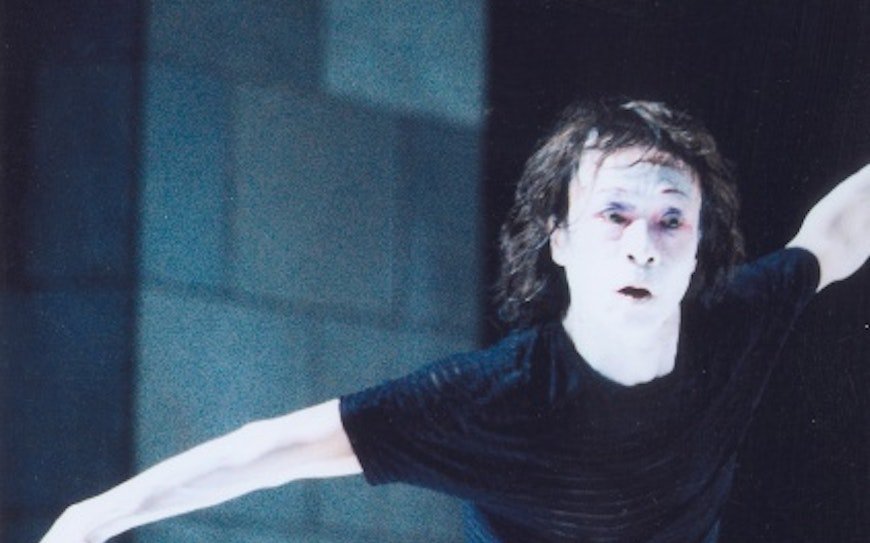
Salish Sea Butoh 2026 Festival Performances
The Salish Sea Butoh Festival proudly presents our
2026 MAIN STAGE Performances
featuring Legendary Japanese master artists from the 1st, 2nd & 3rd generations of Japanese Butoh plus special guest performers from Tokyo, NYC & Seattle!
* FRIDAY, July 31 — MainStage Performance # 1
LOCATION: Downtown Port Townsend American Legion Hall
8:00 PM – Doors open
8:15 PM to 10:15 PM – showtime
Artist LINEUP for MAINSTAGE PERFORMANCE Night # 1
EMIKO AGATSUMA (Tokyo, Japan)
“Plucking off the Darkness of the Galaxy” by Iván Espinosa & Company with Live music by Katinka Kleijn
– INTERMISSION –
YUMIKO YOSHIOKA (Tokyo/Berlin, Germany)
* SATURDAY, August 1st — MainStage Performance # 2
Location: Downtown Port Townsend American Legion Hall
8:00 PM – Doors open
8:15 PM to 10:15 PM – showtime
Artist LINEUP for MAINSTAGE PERFORMANCE Night # 2
MOE YAMAMOTO and KEI SHIRASAKA (Kanazawa, Japan) perform the USA premiere of “This Dazzling Whirl”
– INTERMISSION –
AKIRA KASAI (Tokyo, Japan) performs the USA premiere of “Jūshin Chōbatsu (The Center of Gravity Punishment)”
* SUNDAY, August 2 — MainStage Performance # 3
Location: Downtown Port Townsend American Legion Hall
8:00 PM – Doors open
8:15 PM to 10:15 PM – showtime
Artist LINEUP for MAINSTAGE PERFORMANCE Night # 3
JOAN LAAGE/KOGUT BUTOH
MITSUTAKE KASAI & NAOKA KASAI from Tokyo, Japan
– INTERMISSION –
KOTA YAMAZAKI and MINA NISHIMURA from Tokyo, Japan/NYC
ABOUT BUTOH:
Butoh is a contemporary form of avant-garde dance that originated in Japan after WWII. It is characterized by physical movements that move towards the earth and the subconscious. Butoh was first developed in the late 1950s and 1960s through experimental performances in Tokyo led by its founder and chief architect Tatsumi Hijikata. Butoh, which is influenced by European Surrealism and Japanese Surrealism, German Expressionism, French avant-garde literature, Japanese theatre aesthetics from Kabuki and Noh, and East Asian spiritual thought, quickly spread beyond Japan’s borders in the late 1970’s and was received by diverse international audiences as a major innovation in contemporary dance and performance. Later on, women and female Butoh dancers that studied with Hijikata in the 1970’s such as Yoko Ashikawa, Saga Kobayashi and Natsu Nakajima — as well as pioneering Butoh dancers like Kazuo Ohno and Akira Kasai — profoundly influenced the course of the art form and its development abroad. Their work established Butoh as a form of dance that is disciplined and rigorous, yet spontaneous and idiosyncratic, intellectual and philosophical, yet grounded in the human body. Instead of aspiring to an aesthetic ideal, Butoh reveals the primordial human being and the inner world. It implies total presence where dance is an expression of being in the world as well as containing the world within oneself. Butoh grows from themes such as dreams, ghosts, androgyny, nature, solitude, and the natural cycles of life and death. It continues to evolve into a global artform in the 21st century.